About us

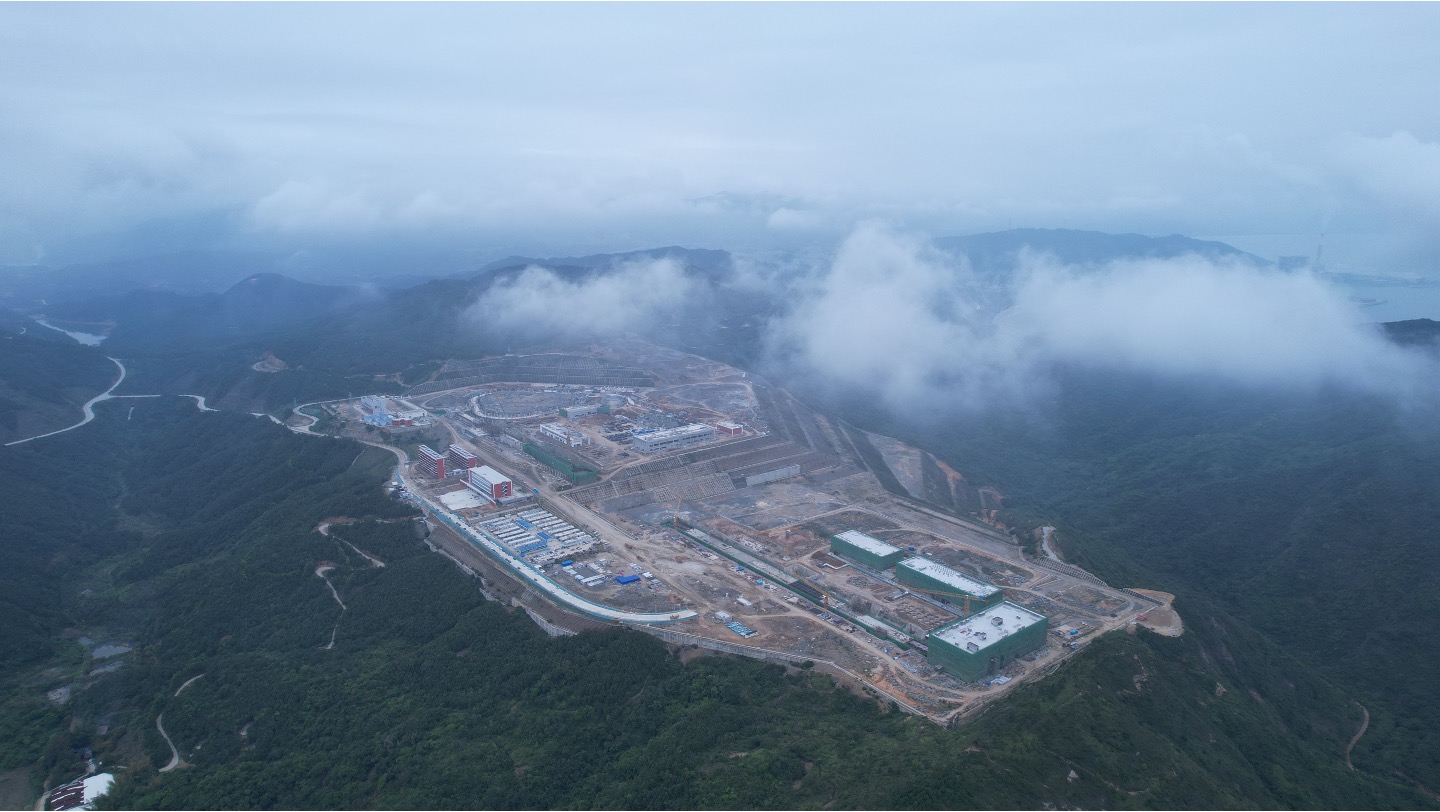
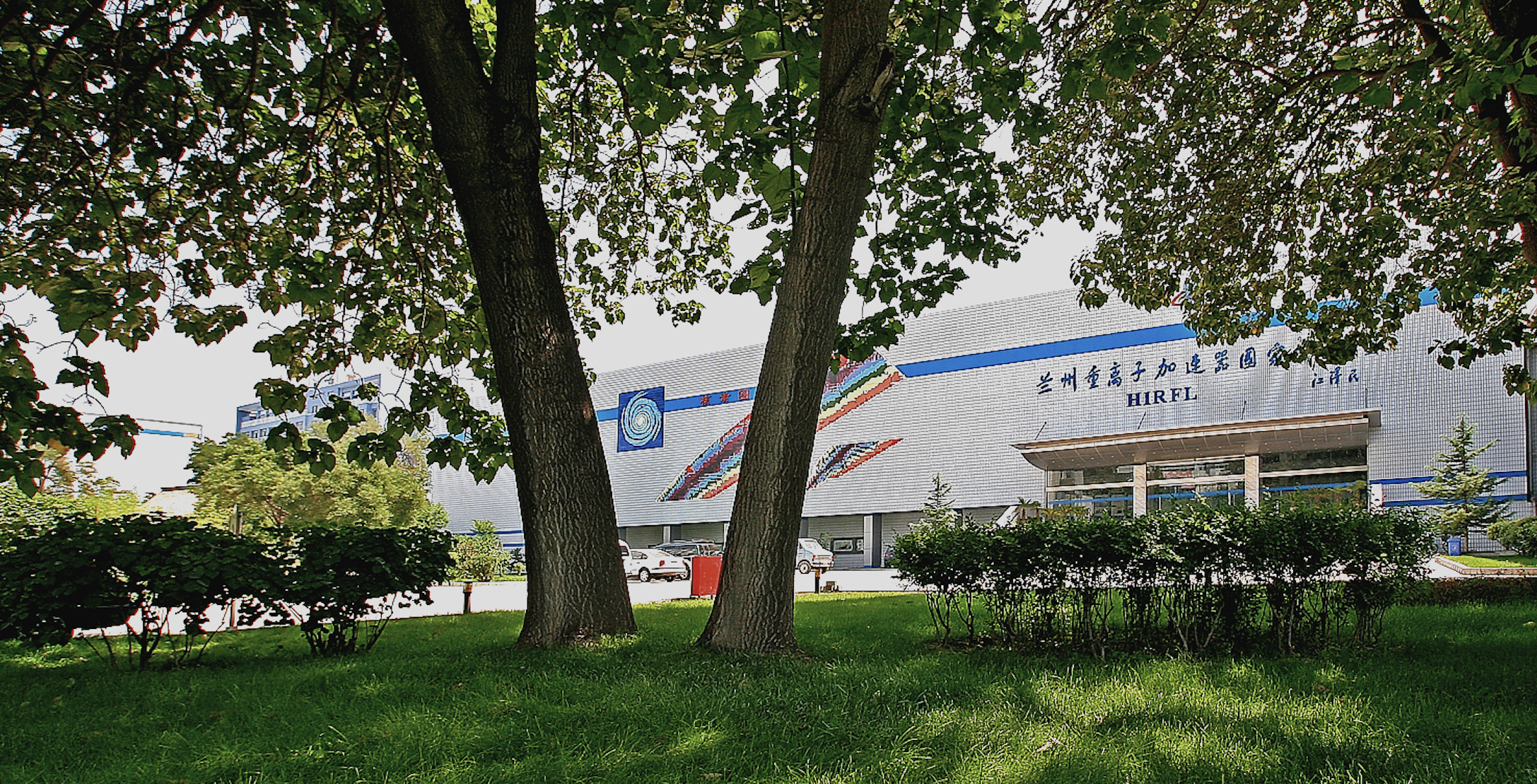
The Institute of Modern Physics (IMP), located in Lanzhou City, Gansu Province, is a leading research center for nuclear physics in China. It conducts cutting-edge research in nuclear physics and plans to build Electron-ion colliders in China (EicC) based on the High Intensity Heavy-ion Accelerator Facility (HIAF) in its new campus in Huizhou, Guangzhou Province.

There is a strong research group in IMP developing nonperturbative approaches based on the light-front field theory and carrying out research in hadron physics (the BLFQ collaboration). This group contains five McCartor awardees (Xingbo Zhao, Jiangshan Lan, Chandan Mondal, Siqi Xu, and Kamil Serafin). It has been following the latest developments in the light-cone physics and carrying out extensive research on hadron structure. Their recent results have drawn the attention of international peers.

The new campus in Huizhou offers an ideal environment to achieve the goal of the Light-Cone conference, thanks to its under-construction/planned experimental facilities, the large active theory community in nuclear and hadron physics (both local and in China) and its new conference center.
jslan
jslan
  • Xingbo Zhao

    • hobby
    • study
    • plan
  • Feature work (content is needed )

      Image

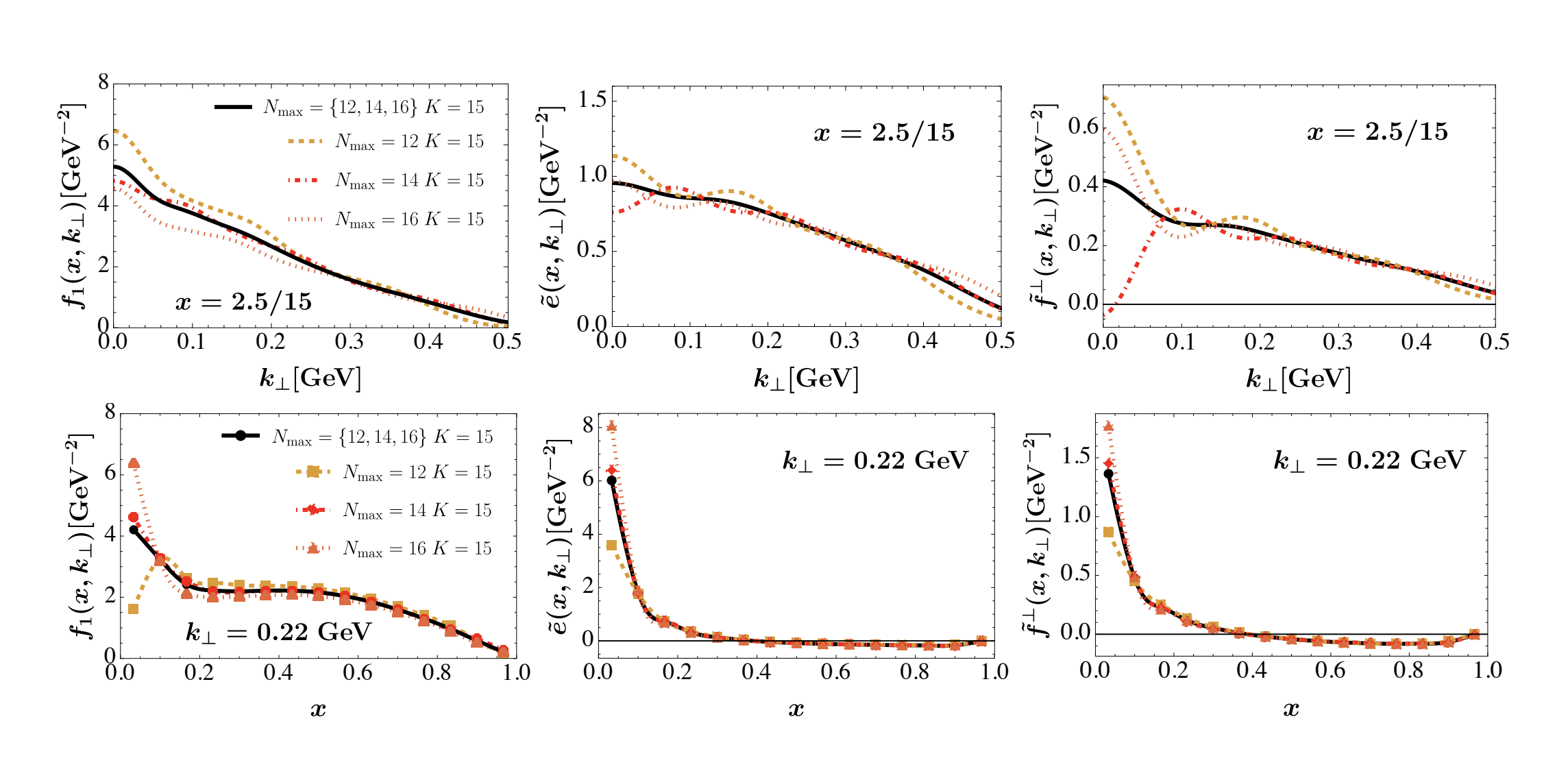
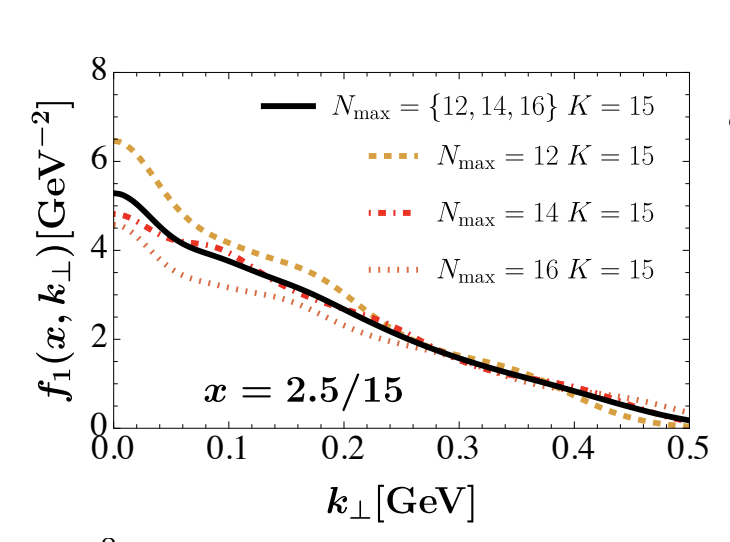
      The BLFQ results for the twist-2 TMD, f1(x, k⊥), and the genuine twist-3 TMDs, ˜e(x, k⊥) and f˜⊥(x, k⊥) at different truncation parameters. Upper panel: the TMDs are functions of k⊥ for fixed x = 2.5/15. Lower panel: the TMDs are functions of x for fixed k⊥ = 0.22 GeV. The solid black lines represent the TMDs after implementing the averaging scheme with truncation parameters Nmax = {12, 14, 16}, K = 15
      Image

      The BLFQ results for the twist-2 TMD, f1(x, k⊥), and the genuine twist-3 TMDs, ˜e(x, k⊥) and f˜⊥(x, k⊥) at different truncation parameters. Upper panel: the TMDs are functions of k⊥ for fixed x = 2.5/15. Lower panel: the TMDs are functions of x for fixed k⊥ = 0.22 GeV. The solid black lines represent the TMDs after implementing the averaging scheme with truncation parameters Nmax = {12, 14, 16}, K = 15

    Team members

    • Xingbo Zhao

      Non-perturbative Approaches in Quantum Field Theory, Quantum Field Theory quantized on the Light-front Hadron structureRelativistic Heavy-ion Physicsuclear ReactionNon-perturbative Approaches in Quantum Field Theory, Quantum Field Theory quantized on the Light-front Hadron structureRelativistic Heavy-ion PhysicsNuclear ReactionNon-perturbative Approaches in Quantum Field Theory, Quantum Field Theory quantized on the Light-front Hadron structureRelativistic Heavy-ion PhysicsNuclear Reaction

    • Xingbo Zhao

      Non-perturbative Approaches in Quantum Field Theory, Quantum Field Theory quantized on the Light-front Hadron structureRelativistic Heavy-ion Physicsuclear ReactionNon-perturbative Approaches in Quantum Field Theory, Quantum Field Theory quantized on the Light-front Hadron structureRelativistic Heavy-ion PhysicsNuclear ReactionNon-perturbative Approaches in Quantum Field Theory, Quantum Field Theory quantized on the Light-front Hadron structureRelativistic Heavy-ion PhysicsNuclear Reaction

    • Xingbo Zhao

      Non-perturbative Approaches in Quantum Field Theory, Quantum Field Theory quantized on the Light-front Hadron structureRelativistic Heavy-ion Physicsuclear ReactionNon-perturbative Approaches in Quantum Field Theory, Quantum Field Theory quantized on the Light-front Hadron structureRelativistic Heavy-ion PhysicsNuclear ReactionNon-perturbative Approaches in Quantum Field Theory, Quantum Field Theory quantized on the Light-front Hadron structureRelativistic Heavy-ion PhysicsNuclear Reaction

    • ß
    • Xingbo Zhao

      Non-perturbative Approaches in Quantum Field Theory, Quantum Field Theory quantized on the Light-front Hadron structureRelativistic Heavy-ion Physicsuclear ReactionNon-perturbative Approaches in Quantum Field Theory, Quantum Field Theory quantized on the Light-front Hadron structureRelativistic Heavy-ion PhysicsNuclear ReactionNon-perturbative Approaches in Quantum Field Theory, Quantum Field Theory quantized on the Light-front Hadron structureRelativistic Heavy-ion PhysicsNuclear Reaction

    • Xingbo Zhao

      Non-perturbative Approaches in Quantum Field Theory, Quantum Field Theory quantized on the Light-front Hadron structureRelativistic Heavy-ion Physicsuclear ReactionNon-perturbative Approaches in Quantum Field Theory, Quantum Field Theory quantized on the Light-front Hadron structureRelativistic Heavy-ion PhysicsNuclear ReactionNon-perturbative Approaches in Quantum Field Theory, Quantum Field Theory quantized on the Light-front Hadron structureRelativistic Heavy-ion PhysicsNuclear Reaction

    Publish

    Conference

    • 2023.9.6

      The monthly LFQCD Seminars are intended to be a platform for junior researchers to present their recent work and to exchange ideas on non-perturbative QCD in particular on light-front QCD and hadron structures.

      click here to join us

    Recruitment

  • The light-front QCD group at the Institute of Modern Physics, Chinese Academy of Sciences announces the opening of one or more postdoc positions beginning in 2023 with flexible starting date. The positions are initially for one year with the possibility of an extension for up to two additional years. The base salary is 12500*12 CNY/year (~21000 USD/year) before taxes but if the applicant wins fellowships by Chinese Academy of Sciences (or other funding agencies), this will be increased to 200000 CNY/year (~31000 USD/year). Job location can be either in Lanzhou or in Huizhou. Candidates should have a Ph.D. by the starting date and have expertise in an area relevant to the group's research interests. Experience with numerical computation is a plus.

    Research Description: The group's interests concentrate on light-front quantum field theory and its applications in hadron/nuclear physics, relativistic heavy-ion physics, strong field QED and other areas where light-front dynamics may find applications. We are particularly interested in exploring nonperturbative frontiers of those areas through large-scale numerical computation and real-time simulation. Scientists in this group include Xingbo Zhao, Chandan Mondal, Jiangshan Lan and Siqi Xu. We collaborate actively with our colleagues working on the Electron-ion Collider in China (EicC) program. This group maintains a regular collaboration with the light-front field theory group in Iowa State University in the US led by Prof. James. P. Vary.